
UX Design Manager · Age of Learning
Age of Learning
UX Design Manager at Age of Learning. My work centered on the enterprise SaaS side of the business — the account, licensing, and reporting tools that school and district administrators use — and extended into front-end work for teachers and caregivers. I returned in 2022 to lead the organization's migration from Sketch to Figma.
Context
Age of Learning is the company behind ABCmouse.com, a consumer early-learning platform used directly by children, teachers, and caregivers. My work centered on the enterprise SaaS tools used by school and district administrators, and by Age of Learning's own internal admin teams, to manage accounts, licensing, rostering, and reporting. It also extended into front-end experiences reaching teachers, caregivers, and children. I first worked there from 2014 to 2017, then returned in 2022 to lead the Sketch-to-Figma design-system migration.
What I did
Led UX for the enterprise dashboards
On an agile scrum team, I led UX/UI for the SaaS side of the platform: account management, onboarding, SSO/SAML, licensing and rostering, two-factor authentication, reporting and analytics, accessibility (ADA), and third-party integrations.
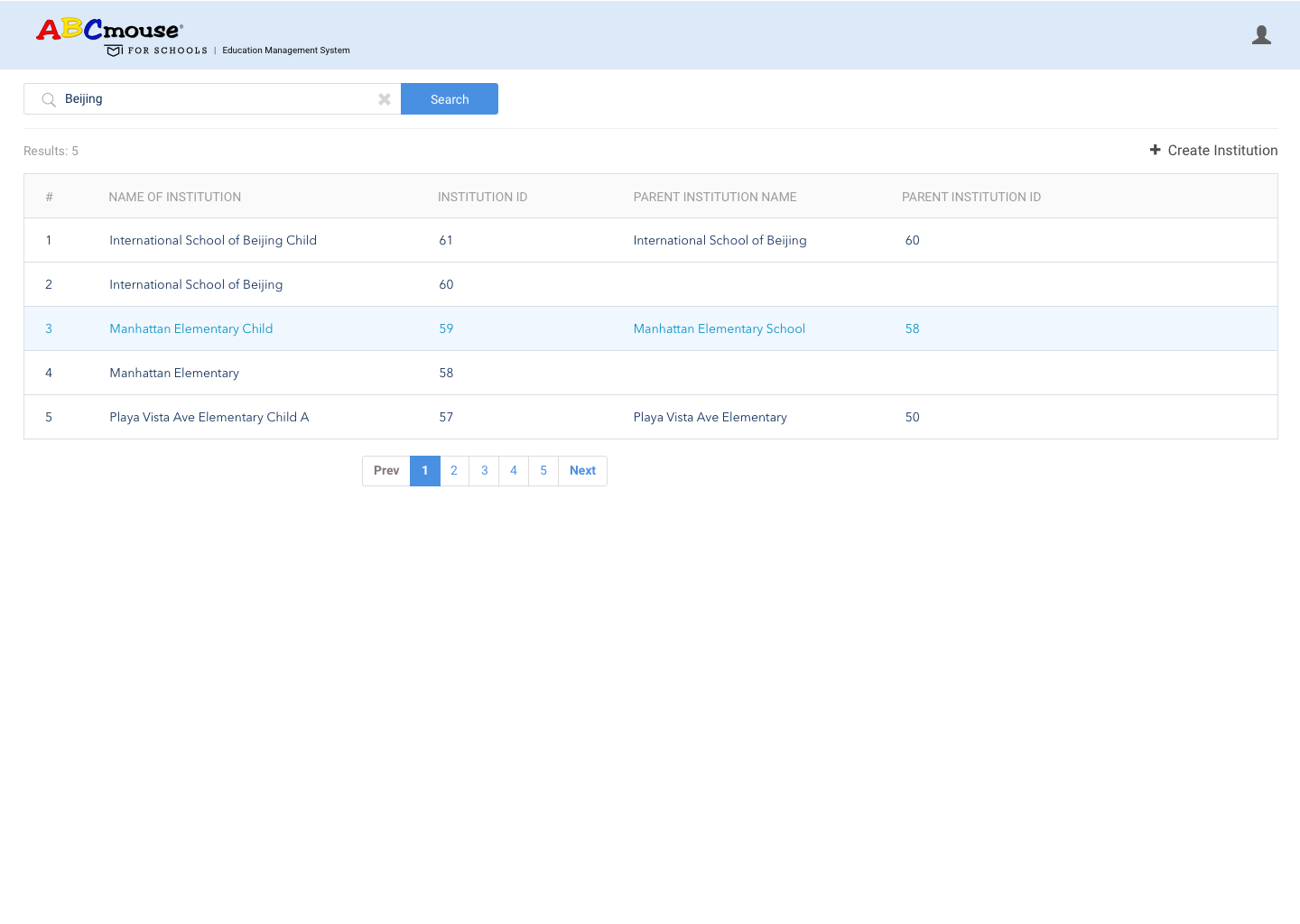
Managing institutions in the Education Management System 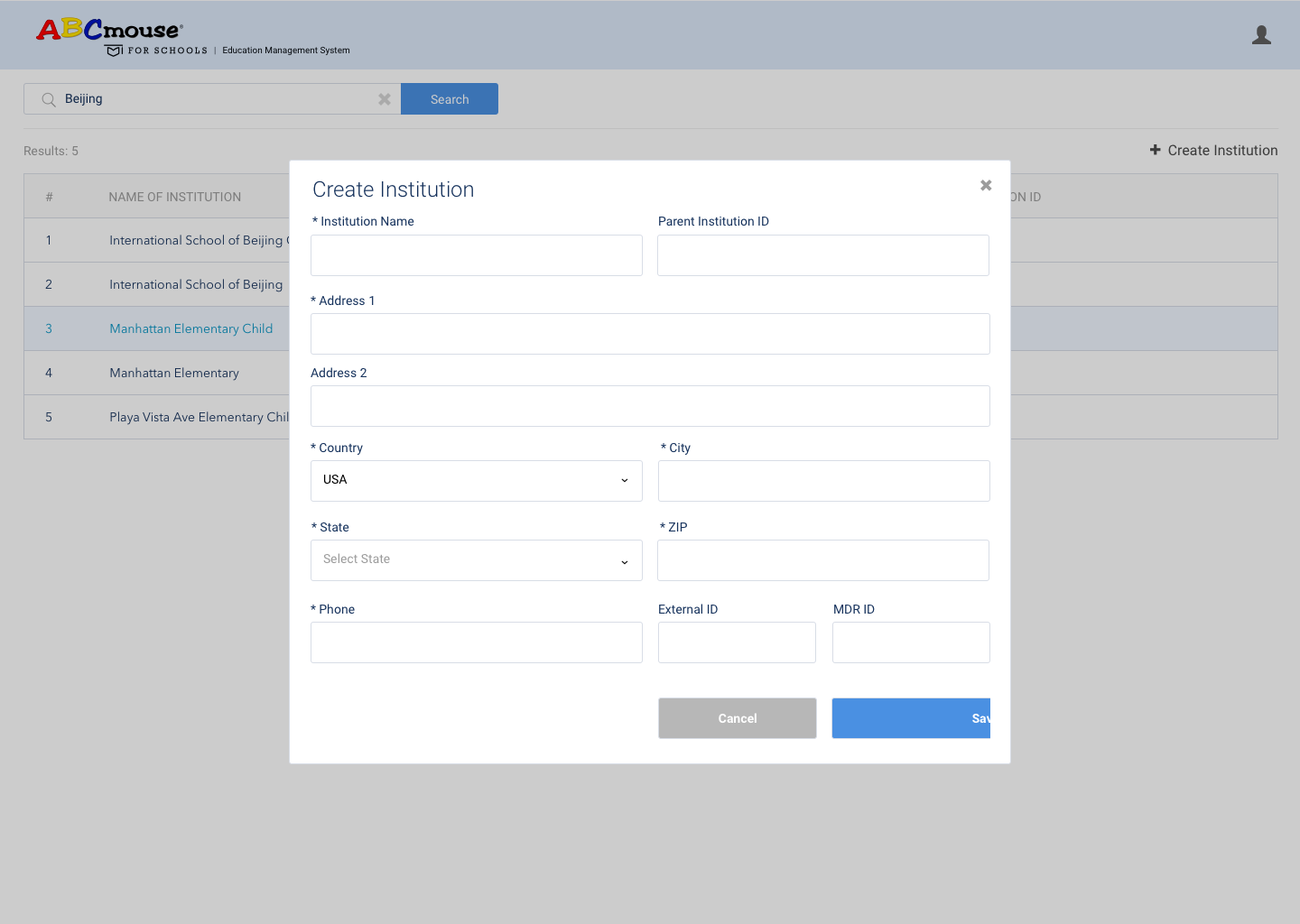
Creating a new institution 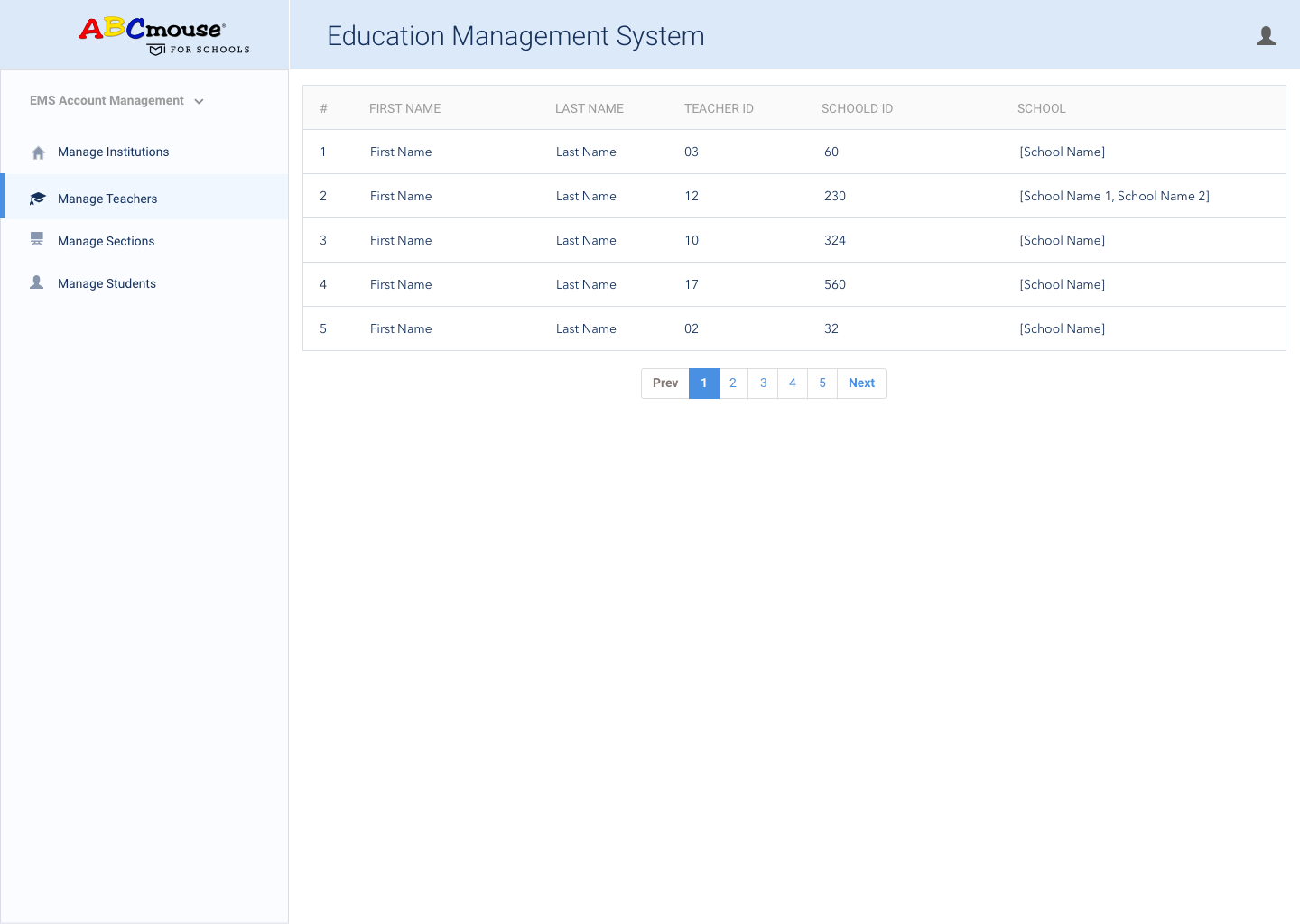
Teacher rostering 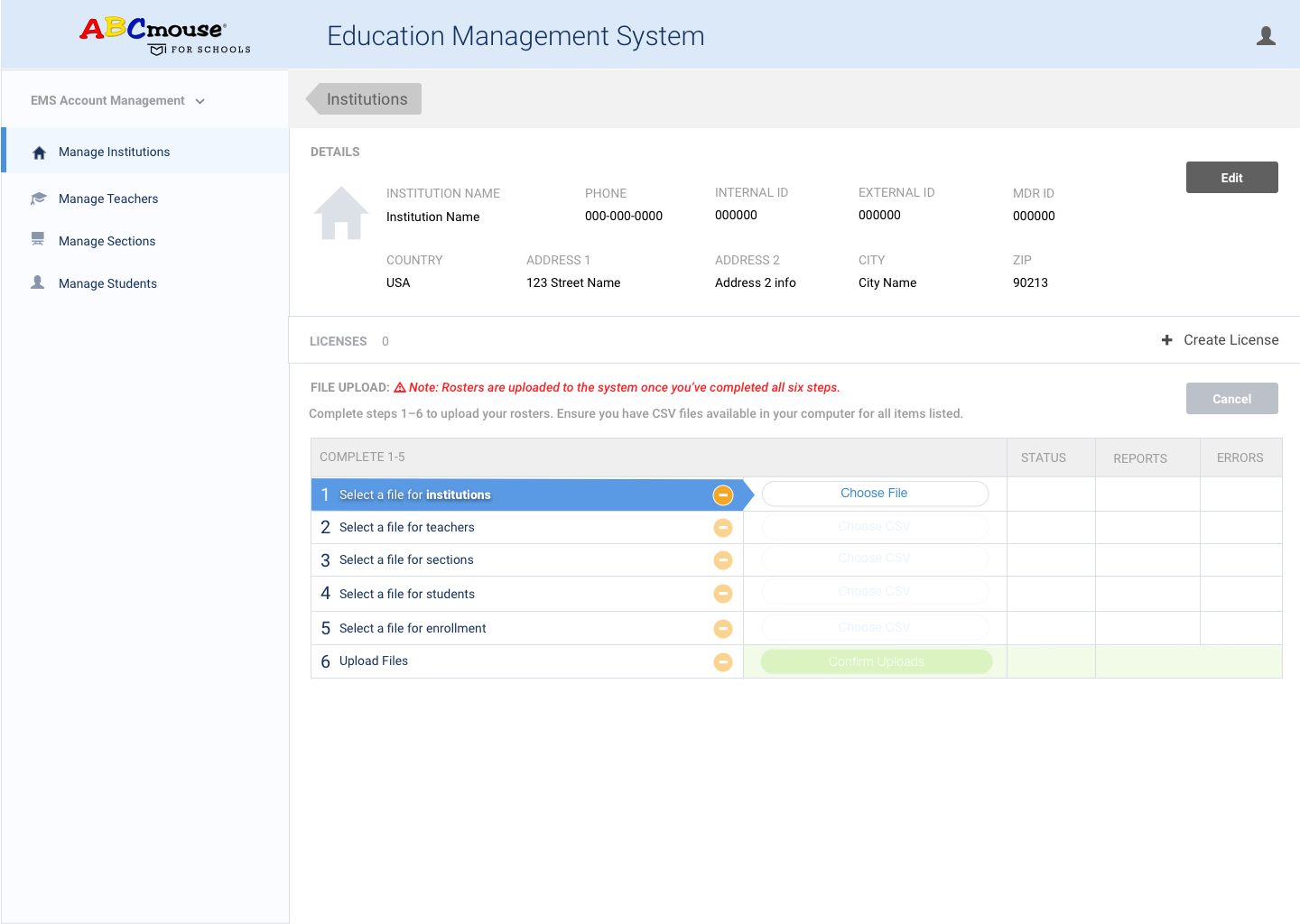
Institution details, licensing, and CSV roster upload
Had a hand in teacher-facing front-end work
Beyond the admin dashboards, I contributed to front-end product work for teachers, including an assessment tool and an early MVP, as well as a caregiver-facing portal.
Drove the Sketch-to-Figma migration
When I returned in 2022, the design org was fairly entrenched in Sketch — local files and hand-managed libraries, with no shared single source of truth across a growing enterprise product line. I'd just spent two years at Moda Health watching the remote-work toolset mature, and I'd seen firsthand that Figma was the better way for a distributed team to work. With more than one designer and remote collaboration now the default, a shared source of truth wasn't a nice-to-have. I made the case for the switch, and the team was glad to make it.
I treated it as a systems problem, not a tooling swap — and ran the conversion as progressive enhancement rather than a big-bang cutover. As new projects rolled in, we built them in Figma only, a few months of that until one day the old Sketch workflow was simply gone and no one missed it. I set the standards for how components and libraries would be structured and rebuilt the design system as Figma libraries: the single source of truth the enterprise products now shared, instead of the same decisions re-invented file by file.
I ran short training sessions for the fellow UX designer I was leading — how to build and maintain the Figma library, so the system lived in more than one person's head. And I brought the engineers along, showing them how to pull specs straight from Figma's inspect panel instead of waiting on hand-written redlines. That part landed hardest: the dev team loved it.
Ran UX strategy end to end
Card sorts, user flows, journey maps, personas, wireframes, and prototypes, then stakeholder walkthroughs that translated executive and partner feedback into design direction.